The following is a rewrite of an article I wrote almost two years ago for the English magazine "Acu". The article was written when there was a real threat that I, as a non-medical acupuncturist, risked being deprived of the opportunity to perform acupuncture treatments in the thoracic region. This threat arose from the media's and politicians' focus on the risk of puncturing the lungs with needle treatment in the thorax. This risk immediately made me think about which points are located in this area, which points I consider indispensable for my practice, and which points I could do without using in the future. Although this was, of course, a serious situation, it was also a useful exercise that forced me to reflect on my practice as an acupuncturist and on the tools I have available in my acupuncture toolbox.
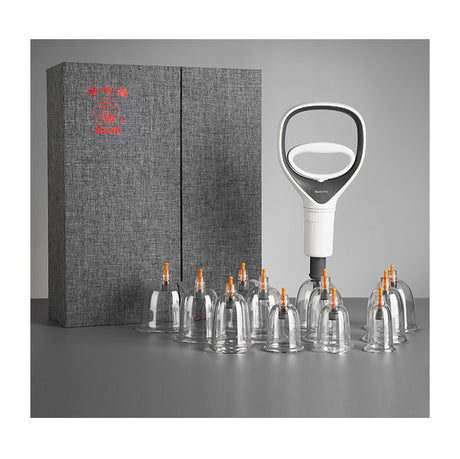
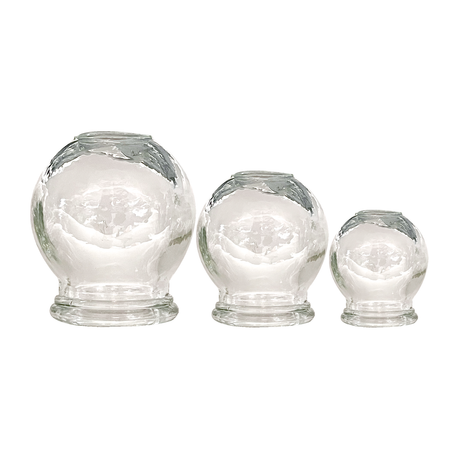
Cupping and Gua Sha could be used for stagnant qi and xue
Surprisingly, I quickly found that I was less concerned about the prospect of losing the upper back shu points than I had expected.
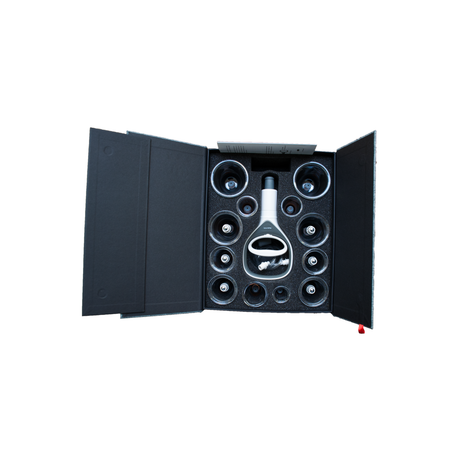
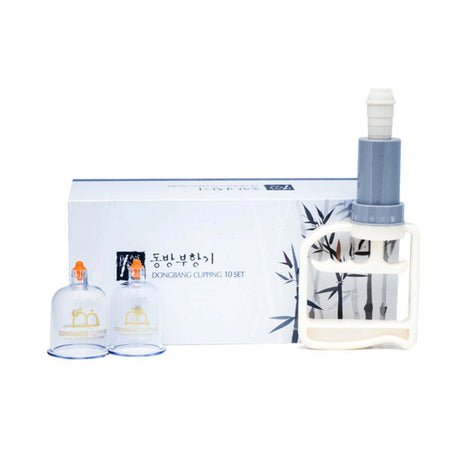
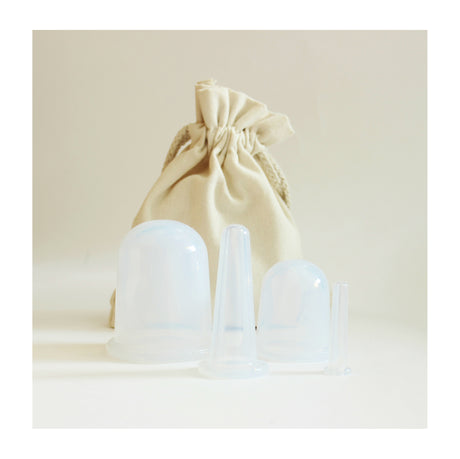
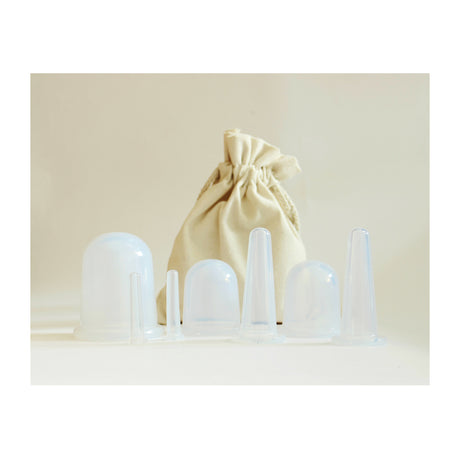
My relative relaxation about losing the use of points like UB 13 and UB 15 was that I could still use yuan-source points on the corresponding meridians to treat chronic xu/deficiency conditions. Furthermore, I would be able to use gua sha and cupping to move stagnant qi and xue in the upper back and shoulder region. See our large selection of cups, cupping sets, and accessories here.
"I have assessed these as indispensable for my practice"
Other points in the chest area could also be replaced by more distal points on the body or points that have specific dynamics, such as luo-connecting points, xi-cleft points, hui-meeting points, Master Tung points, ear points, etc. Four points, however, quickly emerged as points I considered indispensable for my practice, and as points I was most concerned about losing from my repertoire. These points were Liv 14, Ren 22, GB 21, and Ren 17. So why exactly these four points? Lack of space only allows for a discussion of one of these four points, and just like at the end of the English radio program "Desert Island Discs", I have to choose only one of my favorites. From these four points mentioned above, I choose Ren 17.
Fundamental influence on Zong Qi.
There are several factors that make the point so important. As the point's Chinese name Danzhong or Shanzhong indicates, Ren 17 is located in the center of the chest. This means that Ren 17, as a local point, will have an influence on the entire upper jiao. However, this does not necessarily distinguish Ren 17 from so many other points in this area. No, Ren 17 has more to offer than just being another point in the thoracic region.
Firstly, Ren 17 is both the Mu-gathering point for the Pericardium and the Hui-meeting point for qi. Furthermore, it is no coincidence that Huang Di Nei Jing Ling Shu assigns Ren 17 to the category of Sea of Qi points. This is probably due to the point's fundamental influence on Zong Qi. For me, it is especially Ren 17's relationship to the Pericardium and to zong qi that makes the point so invaluable in my daily practice. Ren 17 is just as useful in treating xu/deficiency conditions in the upper jiao, Heart, and Lungs, as it is in treating shi/excess conditions in the same areas. Ren 17 is the primary point I use to activate zong qi and thereby circulate and spread qi in the chest and breasts, especially when there is tightness in the chest or breathing problems such as shortness of breath, and when there is pain or palpitations due to stagnation of Heart qi. Ren 17 not only disperses stagnant qi in the upper jiao, Ren 17 can also regulate rebellious Lung and Stomach qi.
A positive impact on Shen
As mentioned, it is not only in the treatment of shi/excess conditions that I find Ren 17 so indispensable. In the treatment of xu/deficiency conditions, I often use Ren 17 as an important point to tonify Lung and zong qi. Furthermore, because Ren 17 is the Pericardium's mu-gathering point and because the point is located close to the Heart itself, Ren 17 has the additional ability to affect Shen. Again, Ren 17 is an important point to nourish and calm Shen when there is a xu/deficiency condition, and to release stagnations and blockages of qi, xue, or Phlegm that block Shen. Ren 17 can also help drain Heat that agitates Shen.
"I have become more aware of the importance of certain critical points in the region."
Due to its proximity to the breasts, Ren 17 is a point I use to treat problems with breastfeeding, as well as to treat lumps and cysts in the breast and to treat general breast tension.
I still hope that this exercise, where I had to deal with the potential loss of Ren 17 and other points in the upper body, was just an academic exercise, and that Danish acupuncturists will not risk losing vital tools from their repertoire in the future, but if nothing else, I have become more aware of the importance of certain critical points in the region.